
Canada donor Geoff Koontz from Ontario spent two days visiting Lifewater projects in Kenya before the start of the COVID-19 pandemic restricted foreign travel to the region. Here is his report:
The first day started by meeting a group of 10 women who had come together to form a group called “Women of Faith.” Even though they live close to the large town of Nakuru, they had to walk 20 minutes back and forth to a river to get water multiple times each day.
They tried collecting rainwater in small barrels, but it was not enough and it would last only for a few days. So Lifewater gave each woman and her family a large 5,000-litre water storage container for rainwater. Now they have safe rainwater for hand-washing, toilets, and other sanitation needs for almost the entire year.
During the dry season, people still must occasionally get water from the river, but it is not common because it rains so often in this area.
One of the women received a water storage container which she used for her family and her guest house. It has worked so well for her that she has saved funds from the guests to buy a second tank!


Next, we visited several schools that have received support from Lifewater. This one (first photo below) now has its own catchment and storage system for rainwater. Another school had old, broken-down toilets that Lifewater replaced.


While we were at the school, they said that there was a church across the road that had received Lifewater support a number of years ago, so we walked over to see it.
Behind the church was a rainwater catchment system built by Lifewater in 2009 that is still functioning well. Hurray for long-term sustainability!


We also stopped at a small 16-bed hospital (plus 130 outpatients per day) that uses a well for water. Because the well has some contamination, Lifewater provided and installed two rainwater storage tanks, including an extra-large 10,000-litre version (below), the bottom half of which is buried underground. These tanks and piping system allow the hospital to rely on rainwater for its sanitation requirements.


The next place we visited is a community that, with Lifewater’s help, has established a large water distribution system. Water is pumped up a hillside to a large storage tank from which it drains down through a piping network to 160 households and more than 3,000 people. When the pump broke a few months ago, Lifewater replaced it.

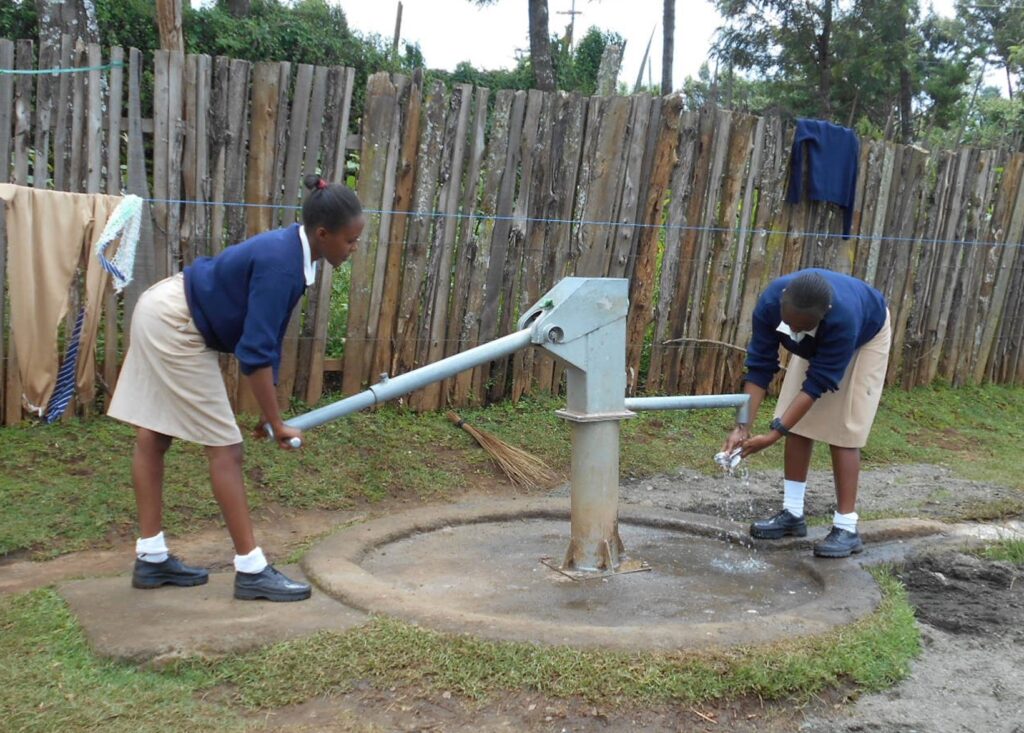
On the second day, we visited several more schools where Lifewater has rehabilitated wells and repaired or replaced hand pumps originally installed by other organizations no longer available to maintain them.


We also visited an orphanage, led by a husband-and-wife team, where Lifewater drilled a well that’s providing water for the couple and all the children, and for the orphanage’s farm animals, crops, and a nearby school.


These photos give an overview of what I saw during my time with Lifewater in Kenya. There are many good things happening there, and it was good to see the work of Lifewater after supporting them over the past years. Thanks to Pastor David for hosting and I pray that the good work will continue!


