We link all donations to specific projects so that when projects are completed, donors have access to detailed reporting including photos, GPS coordinates, community profiles and thank-you letters.


We drill wells to a depth of at least 100 ft, and install a sanitary seal to stop contaminated ground water from leaking in. We also install hand-powered pumps to prevent the contamination that occurs when using a rope-and-bucket method. The new well is disinfected immediately after drilling, then again after the pump has been installed to ensure no contamination from the drilling process remains in the well.
Each well has an official Well Caretaker who the community has selected and we have trained and equipped. Learn more about our Strategy.
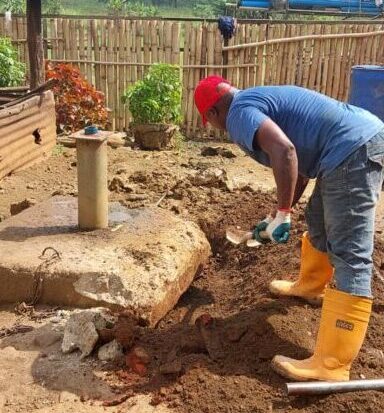
We rehabilitate dormant wells that are no longer providing water. This usually involves replacing the existing hand pump and the concrete pad surrounding it, along with a full disinfection. The well and pad are restored to a safe working condition. Lifewater replaces and rehabilitates wells that we originally drilled, and those drilled by other organizations who no longer provide support.
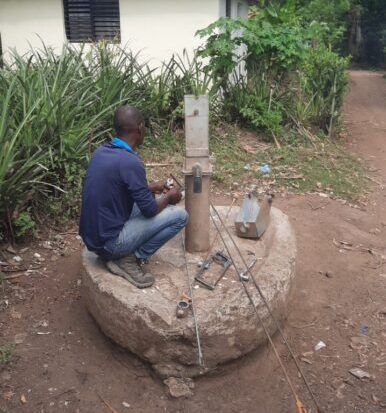
A hand-powered pump is comprised of several mechanical parts, and depending on the frequency of use, repairs will inevitably be necessary. Lifewater repairs pumps that we have installed, and those drilled by other organizations who no longer provide support.
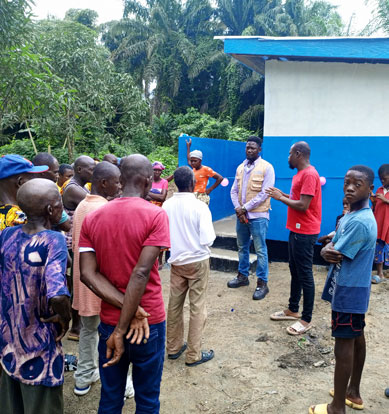
One of the most important ways a community can become more sanitary and water safe is by having proper disposal of their sewage. We build community toilets and hand-washing stations at schools, churches, orphanages, medical clinics, and community centres. The type of washroom varies from single-stall pit latrines to six-stall pail-flush toilets with septic tanks. As a result, there is a wide range in construction costs.
As part of some of these projects, we also install large rainwater storage tanks to store water for sanitation purposes only. Local community members are responsible for ongoing maintenance and treating the water with chlorine to ensure it remains safe to use.
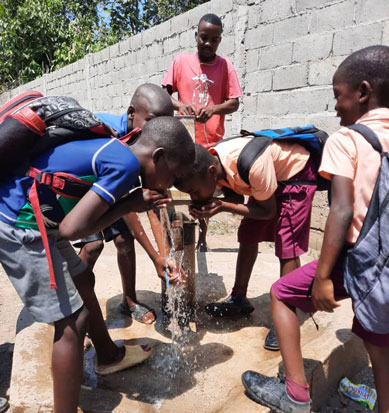
Safe water drawn from a new well or rehabilitated well will quickly become contaminated if the users do not engage in adequate health and hygiene practices. All Lifewater Canada projects include a workshop to help community members learn about the sources of dysentery, cholera, and other diarrheal diseases, disease transmission and how to reduce it, and how to care for their water and environment. We also offer stand-alone training in communities where there isn’t an ongoing Lifewater project.
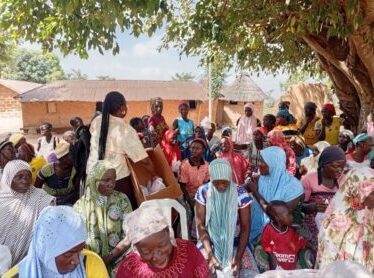
We distribute washable/reusable sanitary pads at health and hygiene workshops, ensuring menstrual periods do not stop girls from attending school and continuing their education. This program began with a team in Kenya, but in 2025 we successfully incorporated Dignity Kits in Liberia and Nigeria as well.
Read more about our Dignity Kit program and the fight against "period poverty".
